
Every carpet looks new on the day it is fitted. The colour is even, the pile stands up, and the whole room feels softer. The real question is how long that feeling lasts — and the answer depends far more on the material than on the price tag alone. Two carpets can cost a similar amount and still age very differently, because their fibres wear at different speeds.
For carpets in Dubai, the home itself also shapes how a carpet ages. Sand comes in on shoes, air conditioning runs for most of the year, and strong sunlight falls through large windows. Knowing each material’s expected lifespan helps you choose well, and helps you judge whether an old carpet needs cleaning or replacement.
Most Carpets Last 5 to 15 Years
As a rough guide, a carpet in a Dubai home lasts between five and fifteen years. A lightly used bedroom carpet can reach the top of that range. A hallway, staircase, or living room carpet in a busy family home will usually sit at the lower end, because those are the places feet land day after day.
Use matters as much as material. A guest-room carpet walked on a few times a week ages slowly; the same carpet on the main route from the front door to the kitchen ages quickly. Pets, children, and furniture that never moves all shorten the life of the carpet underneath them. Regular vacuuming and a deep clean once or twice a year will outlast cleaning only when the carpet starts to look dirty.
Lifespan by Material
Wool is the traditional premium choice: typically ten to fifteen years at home, sometimes longer in a quiet room. Wool fibres spring back after being walked on, so the carpet keeps its look for years. It costs more and needs care with cleaning — harsh chemicals and soaking can damage it — but for a living room or bedroom where you want a carpet to last, it is hard to beat.
Nylon is the hardest-wearing synthetic fibre, usually lasting eight to twelve years. It holds up well in hallways and stairs, and resists crushing, so the pile does not flatten as quickly as softer fibres. It attracts oily marks more readily than wool, so spills need prompt attention, but with regular cleaning it is one of the most practical materials for a family home in Dubai.
Polyester is softer and cheaper than nylon, holds its colour very well in strong sunlight, and usually lasts five to ten years. Its pile can flatten in high-traffic areas, so it suits bedrooms better than a busy hallway. Polypropylene, also sold as olefin, resists stains and moisture well and is popular for dining areas and rental properties, but expect only five to eight years, as heavy furniture can leave marks that do not spring back.
Triexta, a newer fibre, wears much like nylon with very good stain resistance, lasting eight to twelve years with normal care. Natural plant fibres such as sisal and jute are the shortest-lived option — three to five years — and dislike moisture, so they suit dry, low-traffic rooms best. They are a style choice rather than a durability choice.
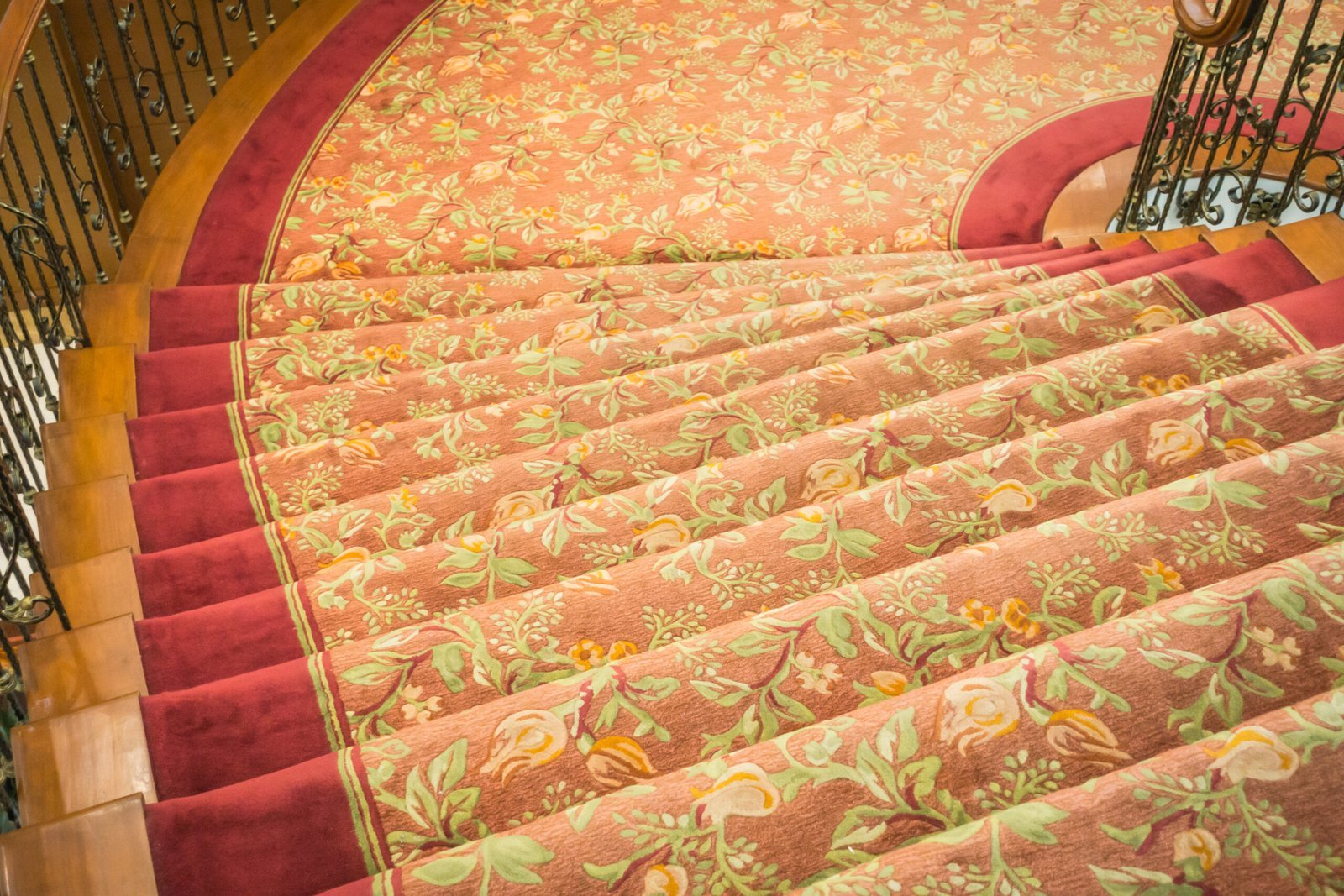
The way a carpet is fitted also affects its life. Carpet tiles in Dubai have a practical advantage: a single stained or worn tile can be lifted and replaced without changing the whole floor, so the rest lasts longer. Wall-to-wall carpet in Dubai ages as one piece, so when the traffic lanes wear, the whole carpet usually has to go. Good underlay helps a fitted carpet last longer by cushioning every step. For customized carpets in Dubai, choose the pile with the room’s traffic in mind, not only its look.
What Shortens Carpet Life in Dubai Homes
Sand is the quiet enemy of carpets in Dubai. Fine grains work into the pile and act like sandpaper with every step, cutting fibres slowly. A doormat at every entrance, and leaving outdoor shoes at the door, does more for carpet life than any cleaning product. Vacuum slowly, so the machine has time to lift grit from the base of the pile.
Sunlight fades some carpets unevenly, especially near floor-to-ceiling windows, so use curtains or blinds during the strongest afternoon sun. Blot spills at once, never rub, and let the carpet dry fully after wet cleaning. Heavy furniture that never moves compresses the pile, so move chairs and tables a little now and then. Finally, the wrong cleaning method can do lasting harm — too much water or the wrong detergent — so ask the supplier how the carpet should be cleaned before you buy it.

Signs It Is Time to Replace Your Carpet
Age alone is not the test: some carpets look tired at six years and some look fine at twelve. Matting is the first sign — when the pile stays flat after vacuuming and no longer springs back, the fibres have worn out. Persistent stains that survive professional cleaning are another, especially in dining areas and children’s rooms.
Smell matters too. A carpet that keeps an odour after a proper deep clean may have absorbed spills deep into its backing or underlay, and no surface cleaning will fix that. Wrinkles that return after stretching usually mean the backing has stretched or the underlay has failed. Fraying at doorways, seams coming apart, and a backing that feels brittle when a corner is lifted all mean the carpet has reached the end of its useful life.
How to Make Your Carpet Last Longer
Start with the entrance: a doormat outside and inside each main door catches most sand before it reaches the carpet. Vacuum high-traffic areas two or three times a week, and the rest of the home at least once a week. Deep-clean once or twice a year with a method suited to the fibre, testing any product in a hidden corner first. Deal with spills the same day, rearrange furniture occasionally, and protect the sunniest spots with curtains during the hottest part of the day.
Choosing the right material for the room matters most of all. A tough nylon in the hallway, a soft wool in the bedroom, and a stain-resistant, replaceable tile in the playroom will each last far longer than one material used everywhere regardless of traffic. Buy for the room, not only for the showroom.
A carpet’s lifespan is decided before it is fitted: by the fibre, the construction, and whether it suits the room it will live in. Wool and nylon reward a higher upfront cost with a longer life. Polyester and polypropylene keep costs down but need earlier replacement in busy areas. Regular vacuuming, prompt stain care, and protection from sand and sun will stretch every year a little further.
If your carpet is matted, stained, or past its best, or if you are choosing a new one and want advice on which material suits your home, contact Decent Star Furniture. Decent Star Furniture supplies and fits carpets across Dubai, including carpet tiles, wall-to-wall carpet, and customized designs, with a free measurement so the carpet you choose fits the room — and lasts. Call or WhatsApp +971 52 497 7538 to book a visit and get advice on the right carpet for your home.