
Most people choose a carpet by colour and feel. They run a hand over the pile, compare two shades, and decide. What they rarely see is the layer underneath — and that hidden layer often decides whether the carpet feels soft or flat and lasts for years or wears out far too soon. Carpet underlay is the cushion fitted between the floor and the carpet. It is out of sight once the carpet is down, but every step lands on it.
In Dubai homes, underlay does extra work. Hard floors underneath, heavy furniture, and sand tracked in from outside all put pressure on a carpet. A good underlay spreads that pressure and protects the carpet backing. A poor underlay — or none at all — leaves the carpet to take every footstep directly, and the signs show up sooner than most people expect.
What Carpet Underlay Actually Does
Underlay is a resilient layer, usually made from foam, rubber, felt, or a combination of materials. When you step on a carpet, the underlay compresses slightly and springs back. That small movement is what makes a carpet feel soft and springy instead of hard and thin. Without it, even a thick-looking carpet can feel flat.
Comfort is only the start. Underlay also absorbs sound: it softens footstep noise and takes the echo out of a hallway. Most importantly, it protects the carpet itself — by cushioning each step, it reduces wear on the carpet backing and helps the pile keep its shape for longer.
The Main Types of Underlay
Foam underlay is the most common choice for homes. It is light, affordable, and comfortable underfoot, and suits most living rooms and bedrooms. Its quality varies a great deal, so density matters more than thickness alone: dense foam holds its shape, while very soft, cheap foam can flatten within a year or two in a busy hallway.
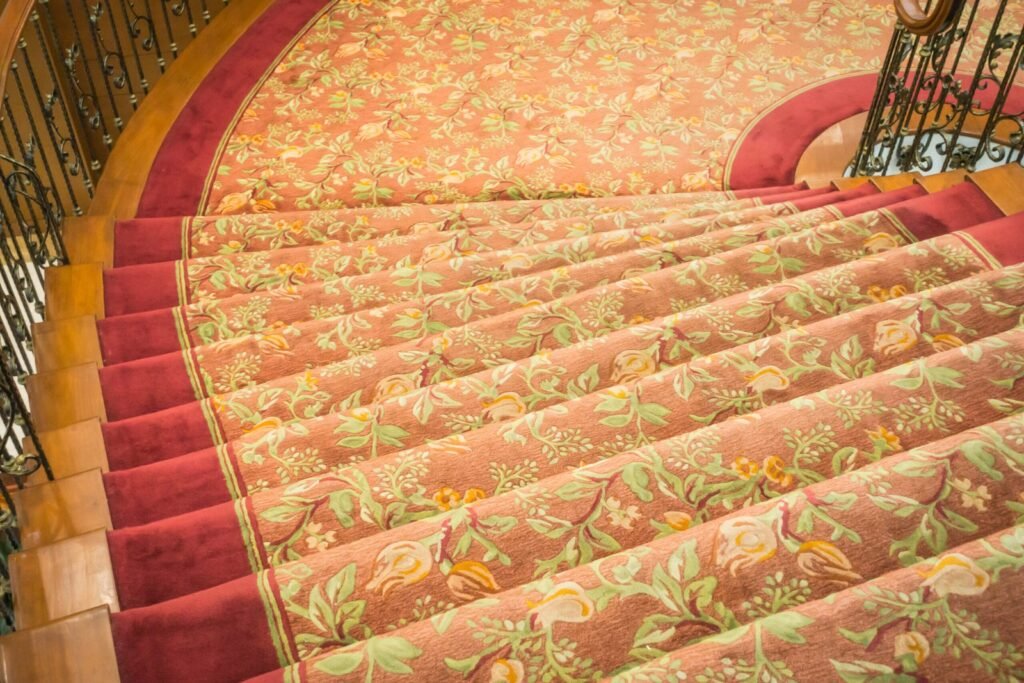
Rubber underlay is denser and tougher, often chosen for stairs and busy corridors, where feet land in the same places again and again. It gives a firmer feel and stands up well to heavy use, but it costs more. Felt underlay is firm and long-lasting, and suits wool carpets. For wall-to-wall carpet in Dubai, the installer will usually recommend the underlay that matches the carpet type, because the wrong pairing can make a good carpet perform badly.
Thickness and Density: What to Ask For
Thickness is easy to picture, but density is what really counts. Too thick, and the carpet can feel spongy and unstable, especially on stairs, where the carpet must grip firmly. Too thin, and the carpet gets little protection at all.
As a rough guide, most Dubai living rooms and bedrooms work well with an underlay around 8 to 11 millimetres thick. Stairs need a thinner, denser underlay so the carpet stays tight over each step. Ask the supplier two questions: what is the density, and how long is it guaranteed to keep its shape?

Where Underlay Matters Most — and Where It Does Not Apply
Underlay earns its keep in the rooms people walk through every day: the living room, the hallway, the stairs, and a busy family bedroom. These are the places where a carpet flattens first and where a little extra cushioning is felt with every step.
There are places where fitted underlay does not apply. For Carpet tiles in Dubai, they are usually laid directly onto a prepared floor, often with a backing built into the tile itself, so a separate underlay is rarely used. If a supplier suggests adding underlay under carpet tiles, ask why — in most cases the tile system is designed to work without it, and a soft layer underneath can make the tiles move or lift at the edges.
Signs Your Underlay Has Worn Out
Underlay usually wears out before the carpet above it looks old. The first sign is feel: a carpet that once felt springy starts to feel flat and hard, especially in the middle of the room or along the path to the door. Wrinkles that keep coming back after stretching often point to underlay that has lost its spring.
Noise is another clue. If footsteps sound louder than they used to, the sound-absorbing layer may have flattened. When a carpet is lifted for replacement, always check the old underlay first: if it is flattened, torn, or powdery, fitting a new carpet over it wastes much of the benefit of the new carpet. Replacing the underlay at the same time is usually the wiser spend.
Practical Tips Before You Buy
Start with the room, not the roll. A quiet guest bedroom and a staircase used by the whole family need very different underlay. Note the floor underneath — tile, screed, or wood — and tell the supplier, because the underlay must suit that surface.
Ask for samples and test them properly. Stand on a sample over a hard floor and see how quickly it springs back. Compare two densities side by side rather than judging by thickness alone. When you get a quote, check what is included: measuring, underlay, fitting, grippers, door bars, and removal of the old carpet and underlay. For customized carpets in Dubai, confirm that the underlay suits the carpet weight and pattern.
The Layer You Never See, Felt With Every Step
Carpet underlay is easy to overlook because it disappears the moment the carpet goes down. Yet it shapes comfort, quiet, and how long a carpet lasts. The right underlay — firm enough to support the carpet and matched to the room and carpet type — turns a good carpet into a floor that still feels new years later. Choose the layer underneath with the same care as the carpet itself. At Decent Star Furniture in Al Quoz, Dubai, we supply and fit carpets with the underlay matched to each room. To plan new carpet, contact Decent Star Furniture through our contact page, or call and WhatsApp us on +971 52 497 7538 for a free measurement.