
Layering a rug over carpet used to be seen as a mistake — something you did only because you could not remove the carpet underneath. Today designers do it on purpose. A well-chosen rug can define a seating area, add colour and texture, and make a plain fitted carpet feel like part of a finished room. Done badly, though, it looks like a rug that was simply dropped on the floor. The difference is in the size, the contrast, and the way the rug is anchored. In Dubai homes, where many villas and apartments already have fitted carpet, layering is a practical way to refresh a room without replacing the floor.
Choose a Rug That Contrasts With the Carpet
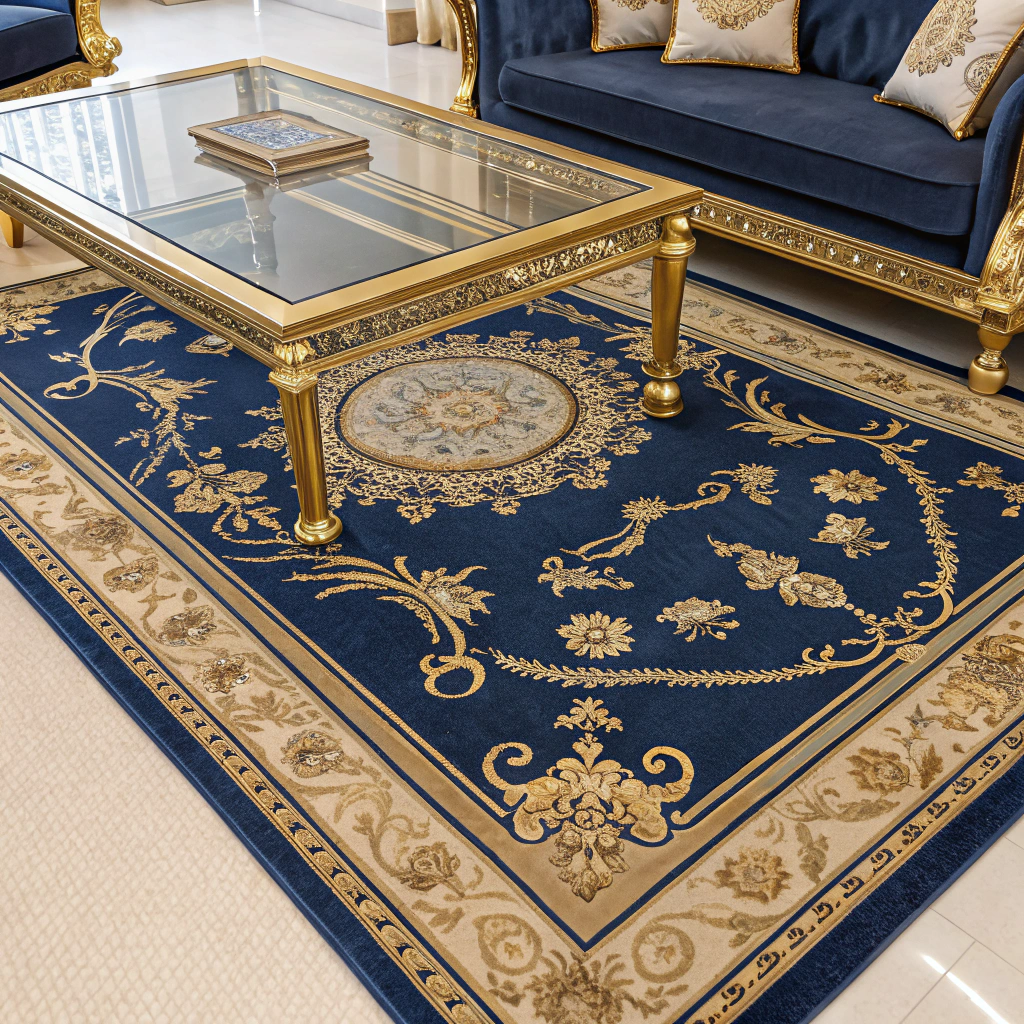
The first rule of layering is contrast. If your rug is the same colour, pattern, and texture as the carpet underneath, the two blend into one shapeless surface and the rug disappears. You need a clear difference so the eye can see where one layer ends and the other begins. Over a neutral beige or grey carpet, try a deeper tone — navy, charcoal, terracotta, or a rich pattern. Over a darker carpet, a lighter rug in cream or soft grey lifts the room. Pattern works the same way: a plain carpet suits a patterned rug, while a patterned carpet needs a mostly plain rug with a simple border so the two do not fight each other. Texture matters too. A flat, low-pile carpet pairs beautifully with a thicker, plusher rug, because the change underfoot signals that the rug is a deliberate feature.

Get the Size Right — Bigger Is Almost Always Better
Size is where most layering goes wrong. A rug that is too small floats in the middle of the room, makes furniture look crowded, and leaves an awkward border of carpet showing on all sides. As a general guide, the rug should be large enough for at least the front legs of your sofa and chairs to sit on it. In a living room, that usually means a rug extending well beyond the coffee table on every side. Measure the seating area first, not just the coffee table. Arrange your furniture as you want it, then measure from the outer edge of one sofa to the outer edge of the other, and add a little extra. In a bedroom, the rug should extend beyond the sides and foot of the bed so you step onto something soft in the morning. If you are unsure between two sizes, choose the larger one — a generous rug grounds a room, while a small one shrinks it. Leave a border of roughly 30 to 45 centimetres of carpet visible around the rug, and mark the outline with tape on the floor before you buy so the border comes out even.
Stop the Rug From Moving
A rug on top of carpet will slide, bunch, and ripple unless it is held in place — and nothing ruins the look faster than a rug that creeps a few centimetres every day. The fix is simple: use a rug pad or gripper designed for use over carpet. A pad made for carpet-on-carpet use adds grip and a little cushioning, and protects the carpet underneath from wear where the rug edges rub. Furniture helps too. When the front legs of a sofa or heavy chairs rest on the rug, their weight anchors it. Check the rug edges regularly in high-traffic routes, and smooth them back before a fold becomes a trip hazard, especially in homes with children or older family members.
Match the Style to the Room, Not Just the Floor
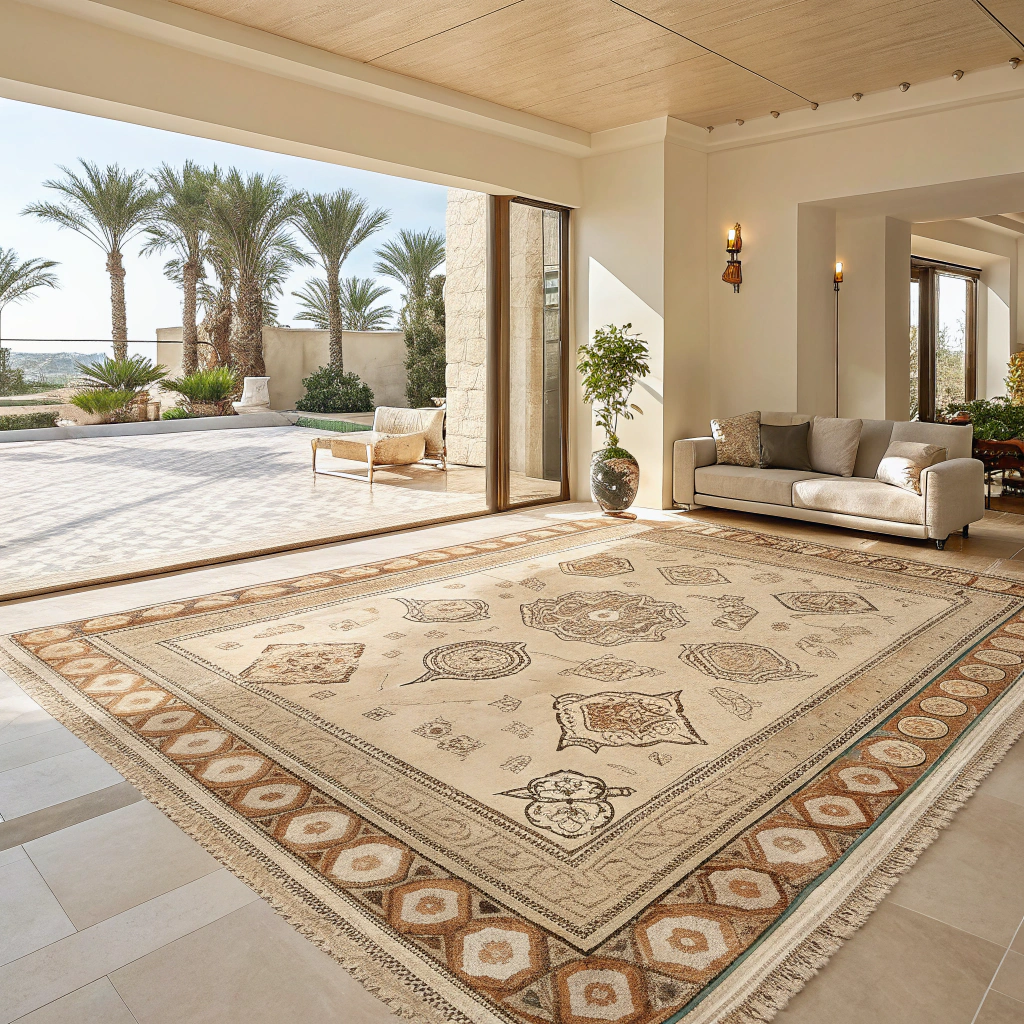
Layering works when the rug belongs to the room’s overall style, not only when it contrasts with the carpet. In a modern Dubai apartment with clean lines and pale furniture, a rug with a simple geometric pattern or a subtle border keeps the look calm. In a traditional majlis or a villa living room with carved wood and rich fabrics, a classic patterned rug with a defined border ties the furniture together. Colour is the easiest way to connect the rug to the rest of the room. Pick one colour from your cushions, curtains, or artwork and repeat it in the rug, so the rug feels chosen rather than random. You do not need an exact match — a rug that echoes a cushion colour or a curtain tone is enough. Think about use as well. A light-coloured rug in a busy family living room will show every footprint and spill, so a mid-tone or patterned rug is more forgiving there.
Practical Tips Before You Buy
Before you spend on a rug, do three quick checks. First, test the combination at home if you can. Colours look different under Dubai daylight, warm evening lighting, and artificial light, so a rug that looks perfect in a showroom can look dull or too bright at home. Second, check cleaning and care. A layered rug collects dust from above and below, so it needs regular vacuuming and an occasional professional clean — choose a material you can realistically maintain, such as wool or a good-quality synthetic. Third, check the carpet underneath. If the fitted carpet is damaged or lifting at the edges, a rug will hide the problem for a while but will not fix it — get the carpet assessed first.
A Layered Look That Feels Finished
Layering a rug over carpet is not about hiding the floor — it is about building a room in layers, the way designers do with cushions, curtains, and lighting. Get the contrast right, choose a size that anchors your furniture, stop the rug from moving, and tie its colours to the rest of the room, and the result looks polished rather than improvised. If you would like help choosing a rug that works with the carpet you already have, Decent Star Furniture can help. We supply a wide range of rugs in Dubai, from classic patterns to modern designs, and we can measure your room and show you options in your own light. To start, contact Decent Star Furniture through our contact page, or call or WhatsApp us on +971 52 497 7538 to book a free measurement.