
Dubai sunlight is beautiful, but it is also relentless. From late morning until sunset, strong sun pours through villa windows and apartment glass, heating rooms, fading furniture and making air conditioning work much harder than it should. The right curtains do far more than dress a window: they control heat, glare and privacy, and the fabric you choose decides how well they do that job.
Not every fabric behaves the same way in Dubai conditions. A light cotton that looks lovely in a cooler climate can let heat straight through here, while a dense weave can turn a bright living room into a comfortable, shaded retreat. Here is how the main curtain fabrics compare, and how to pick the right one for each room.
1. Blackout Fabrics: The Strongest Defence Against Heat
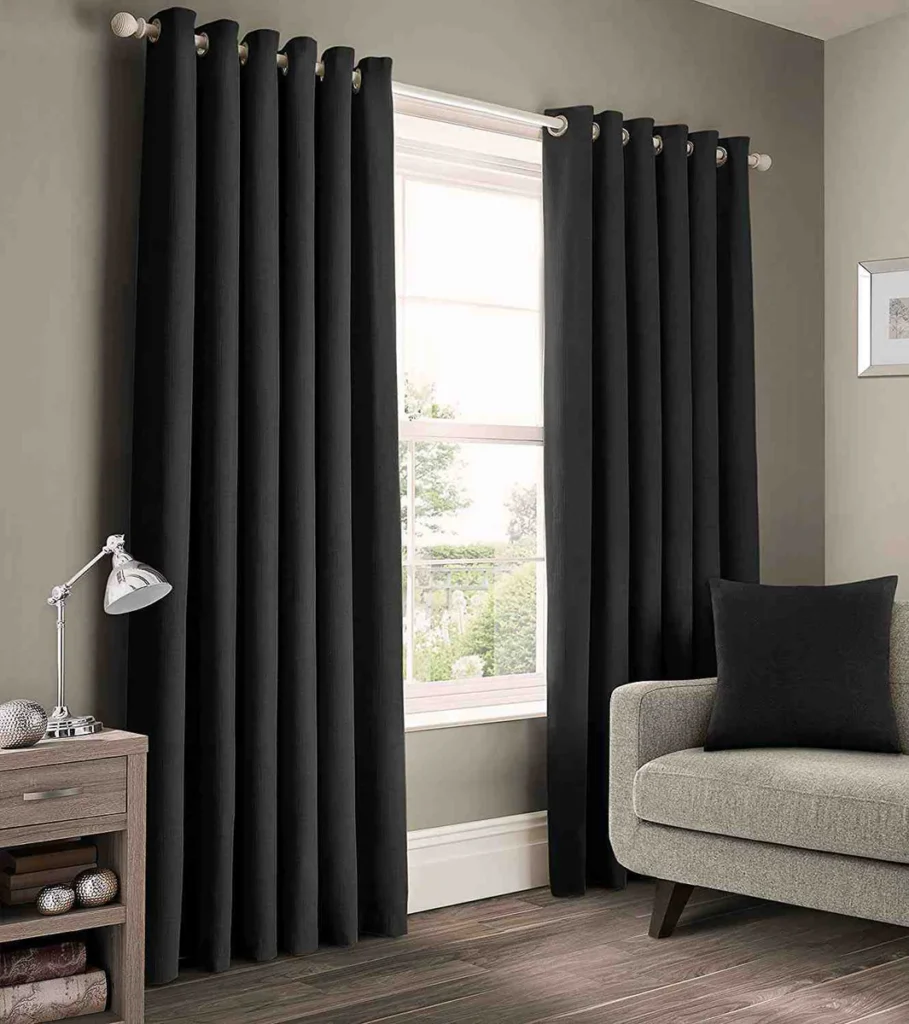
Blackout fabric is the hardest-working option for Dubai homes. Its dense, coated weave blocks almost all incoming light, and with it a large share of solar heat. Bedrooms stay darker and cooler, which matters for afternoon sleep, shift workers and children’s rooms, and living rooms stay comfortable even when the sun is directly on the glass.
Blackout curtains work best in west-facing rooms, where the afternoon sun is strongest, and in any room where glare on a television or screen is a daily annoyance. They also insulate at night, helping cool air stay inside. If you want the strongest heat and light control available, start with our range of blackout curtains, made to measure for your exact window size.
One practical tip: blackout curtains only work at full strength when they cover the whole window, with a little overlap on each side. A curtain that is too narrow leaves gaps where sunlight and heat leak through, so always measure the full width, not just the glass.
2. Linen and Linen Blends: Light, Airy, but Not for Direct Sun Alone
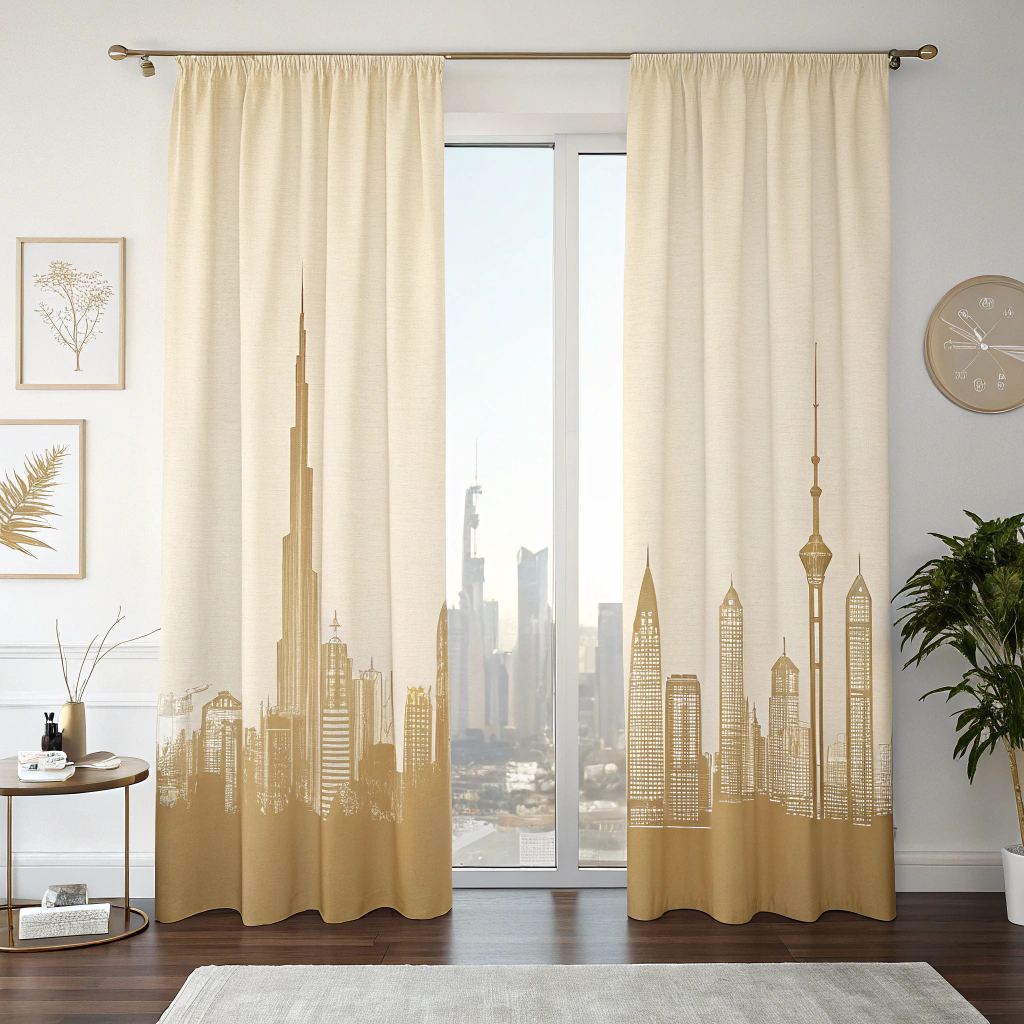
Linen is a favourite in Dubai because it looks relaxed and natural and lets a room breathe. A linen curtain softens daylight beautifully and suits living rooms, dining rooms and majlis spaces where you want brightness without harsh glare. Linen blends, mixed with polyester or cotton, hold their shape better and resist wrinkling, which makes them easier to live with day to day.
On its own, however, linen is not a heat blocker. In a south- or west-facing room it will filter light rather than stop heat, so it works best paired with a second layer — a sheer behind it for daytime privacy, or a blackout lining for rooms that need real sun control. If you love the linen look, ask for a lined version: you keep the soft appearance from inside the room while gaining much better performance against the sun.
3. Sheers: Privacy and Soft Light, Without Darkness
Sheer curtains, usually voile or a light polyester weave, are ideal for daytime living spaces. They let daylight in, soften the view of neighbouring buildings and give daytime privacy, without making a room feel closed in. In Dubai apartments, where neighbouring towers are close, sheers are often the first layer on every window.
Sheers alone will not reduce heat in any meaningful way, so treat them as part of a layered system rather than a standalone solution. The classic Dubai combination is a sheer for the day plus a heavier curtain for the evening: privacy and soft light by day, darkness and insulation at night. That pairing also protects your furniture, because even a sheer cuts some of the direct ultraviolet light that fades sofas and wooden floors.

4. Thermal and Coated Fabrics: Built for Insulation
Thermal curtains use a special coating or an extra insulating layer to slow heat transfer through the window. They are a smart choice for large glass walls, floor-to-ceiling windows and rooms that overheat despite air conditioning. In a villa with big sliding doors, thermal-lined curtains can make a noticeable difference to how long a room stays cool after the air conditioning switches off.
Thermal fabrics tend to be heavier and to hang in fuller folds, which suits formal living rooms and master bedrooms. They also help with noise from busy roads, a useful bonus in many Dubai neighbourhoods. When comparing thermal options, check the lining rather than just the face fabric: it is the lining that does most of the insulating work.
5. Practical Tips for Choosing Curtains in Dubai
Before you fall in love with a fabric, run through these practical checks. First, note which direction each window faces: west and south windows need the strongest fabrics, while north-facing windows can take lighter options. Second, think about how you use the room: bedrooms need darkness, living rooms need flexible light control, and kitchens need fabrics that are easy to clean.
Third, always choose made-to-measure where you can. Dubai windows vary enormously, and a curtain that fits properly — reaching the floor, with enough width to gather fully — performs far better than one a few centimetres short. Fourth, consider colour: lighter colours reflect more heat, while darker colours absorb it, so a light or mid-tone fabric is usually cooler in sun-facing rooms. Finally, plan for cleaning: Dubai dust settles quickly, so pick fabrics you can realistically maintain, and ask about cleaning before you buy.
The Right Fabric Makes the Room
There is no single perfect curtain fabric for every Dubai home. The best choice depends on the direction your windows face, how much light and privacy each room needs, and how you live in the space. Blackout fabrics win for heat and darkness, linen blends win for soft natural light, sheers win for daytime privacy, and thermal linings win for big glass walls.
If you are unsure which combination suits your home, a short consultation can save you an expensive mistake. The team at Decent Star Furniture can show you fabric samples in your own light, measure your windows free of charge, and make home curtains to fit them exactly. Book a free consultation through our contact page, or call or WhatsApp us on +971 52 497 7538.